
How the 2025 Legislation Affects the Ring of Fire, Indigenous Communities, and Environmental Protections
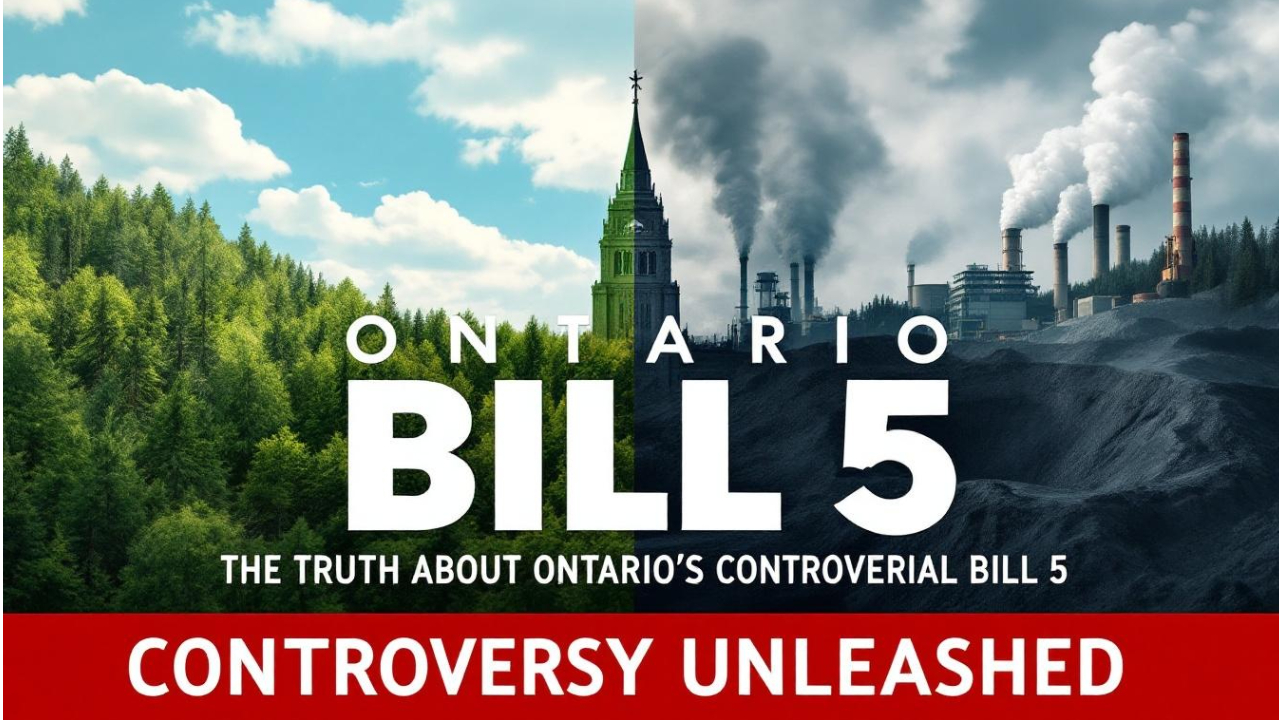
The Truth About Ontario’s Controversial Bill 5
Ontario’s Bill 5, officially known as the Protect Ontario by Unleashing Our Economy Act 2025, has ignited widespread debate and concern across the province. Introduced by Premier Doug Ford’s Progressive Conservative government, this omnibus bill aims to fast-track economic projects by reducing regulatory barriers. However, critics warn that the legislation jeopardizes environmental protections, indigenous rights, and democratic oversight. In this post, we’ll delve into the origins, provisions, and far-reaching implications of Bill 5—and why it’s become one of the most contentious topics in Ontario’s political landscape.
What is Bill 5 and Why Was It Introduced?
Bill 5 was introduced in April 2025 by Ontario’s Progressive Conservative government as a response to external economic challenges, including potential U.S. tariffs and global competition in critical minerals. Led by Premier Doug Ford and key ministers like Stephen Lecce and Greg Rickford, the bill passed its reading on June 5, 2025, despite vocal opposition from environmental groups, indigenous leaders, and political parties.
This omnibus bill encompasses sweeping legislative changes aimed at expediting large-scale projects in mining and infrastructure. However, its fast-tracking through the legislature, aided by a time allocation motion, has left many questioning its transparency and accountability.
The Provisions of Bill 5: Key Features and Concerns
Bill 5 is packed with controversial provisions that have sparked significant concern among stakeholders. Here are the most notable features:
- Special Economic Zones: The bill allows the provincial cabinet to designate areas as “special economic zones,” where provincial laws, municipal bylaws, and even environmental regulations can be suspended. Critics worry about the lack of clarity surrounding the criteria for these zones, fearing unchecked development.
- Weakened Environmental Assessments: Certain projects, such as the Eagle’s Nest Mine in the Ring of Fire, are exempt from mandatory environmental reviews. This move has raised alarm about potential ecological damage in sensitive areas.
- Revised Mining Regulations: The bill amends the Mining Act, enabling the minister to fast-track critical projects while expanding inspection powers that could affect indigenous cultural heritage. Critics argue this undermines both community consultation and environmental safeguards.
These provisions have been justified by the government as necessary to secure economic resilience and compete globally in critical mineral development. However, opponents argue that the bill prioritizes corporate interests at the expense of Ontario’s lands and communities.
Environmental Risks: A Step Back for Conservation?
The environmental implications of Bill 5 are profound, particularly for ecologically sensitive areas like the Ring of Fire. Often referred to as the “Amazon of the North,” this wetland region is a vital carbon sink and home to diverse ecosystems. By bypassing environmental assessments, projects like the Eagle’s Nest Mine could disrupt water systems, wildlife habitats, and carbon storage capacities.
Organizations such as the Canadian Environmental Law Association have described the bill’s special economic zones as “law-free sacrifice zones,” disproportionately affecting vulnerable communities. Additionally, weakened protections under the Endangered Species Act have raised concerns about accelerating biodiversity loss.
Impact on Indigenous Rights and Lands
For many First Nations, Bill 5 represents a direct assault on their rights and sovereignty. The Ring of Fire lies within the traditional territories of several First Nations, including the Neskantaga First Nation, which has been vocal in opposing the bill. Indigenous leaders argue that bypassing environmental assessments undermines their primary channel for consultation.
While the government introduced an amendment to include indigenous consultation, many leaders have dismissed it as insufficient. Ten First Nations under Treaty 9 are pursuing legal action, asserting their decision-making authority over their lands and seeking compensation for decades of marginalization. Some leaders have even threatened blockades if their concerns continue to be ignored.
Local Implications: Eroding Municipal Authority
The bill’s ability to override municipal bylaws has sparked outrage among local communities. For instance, the proposed waste disposal facility in Chatham-Kent—exempted from environmental assessments—has raised fears of groundwater contamination and public health risks. Mayor Darrin Canniff questioned, “If a massive landfill can be forced on our town without a full environmental review, whose town is next?”
This erosion of local control sets a worrying precedent for communities across Ontario, leaving them vulnerable to projects that may not align with their needs or values.
The Pushback: Protests, Legal Challenges, and Public Outrage
Opposition to Bill 5 has been fierce and widespread. Environmental groups, First Nations, and civil rights organizations have united in calling for its withdrawal. The Canadian Civil Liberties Association has likened its provisions to authoritarian measures, while opposition parties staged a midnight filibuster to protest the bill’s passage.
Indigenous protests outside Queen’s Park on June 2, 2025, highlighted the depth of resistance, with leaders vowing to escalate actions if their concerns are not addressed. Social media platforms have been flooded with posts criticizing the bill as a “power grab” that sacrifices Ontario’s future for corporate gain.
A Balancing Act: Growth vs. Sustainability
Bill 5 underscores the tension between economic development and environmental stewardship in Ontario. While the Ford government argues that the legislation is essential for economic resilience, critics warn of long-term consequences for the province’s lands, ecosystems, and communities. The lack of transparency and accountability in implementing the bill further fuels concerns about its broader social and environmental impact.
As legal challenges mount and protests intensify, one thing is clear: the conversation surrounding Bill 5 is far from over. Will Ontario find a way to balance growth with sustainability, or will this legislation mark a turning point for the province’s future? Only time will tell.
What are your thoughts on Bill 5? Do you think this legislation will benefit Ontario in the long run, or are its risks too significant to ignore? Share your thoughts below!
Ontario Bill 5, Doug Ford, Ring of Fire, Indigenous rights, Environmental policy, Ontario mining, Special economic zones, Protect Ontario Act, Canadian politics, Environmental impact, First Nations, Eagle’s Nest mine, Ontario economy, Land use policy, Chatham-Kent,
- Ontario Bill 5 environmental impact podcast,
- Doug Ford Bill 5 Ring of Fire controversy,
- Protect Ontario by Unleashing Our Economy Act 2025,
- Indigenous rights Ontario Bill 5 podcast,
- Special economic zones Ontario explained,
- Ring of Fire mining environmental risks,
- Ontario Bill 5 economic policy debate,
- Eagle’s Nest mine Ontario podcast,
- Chatham-Kent waste facility concerns 2025,
- Ontario Mining Act amendments podcast,
- Neskantaga First Nation Bill 5 opposition,
- Ontario environmental assessment exemptions
- Bill 5 Ontario land use changes 2025,
- Progressive Conservative Ontario policy podcast,
- Environmental degradation Ontario Bill 5,
 Follow